Asurion Korea
← Back to WorkSKT Device Insurance & Protection Portal
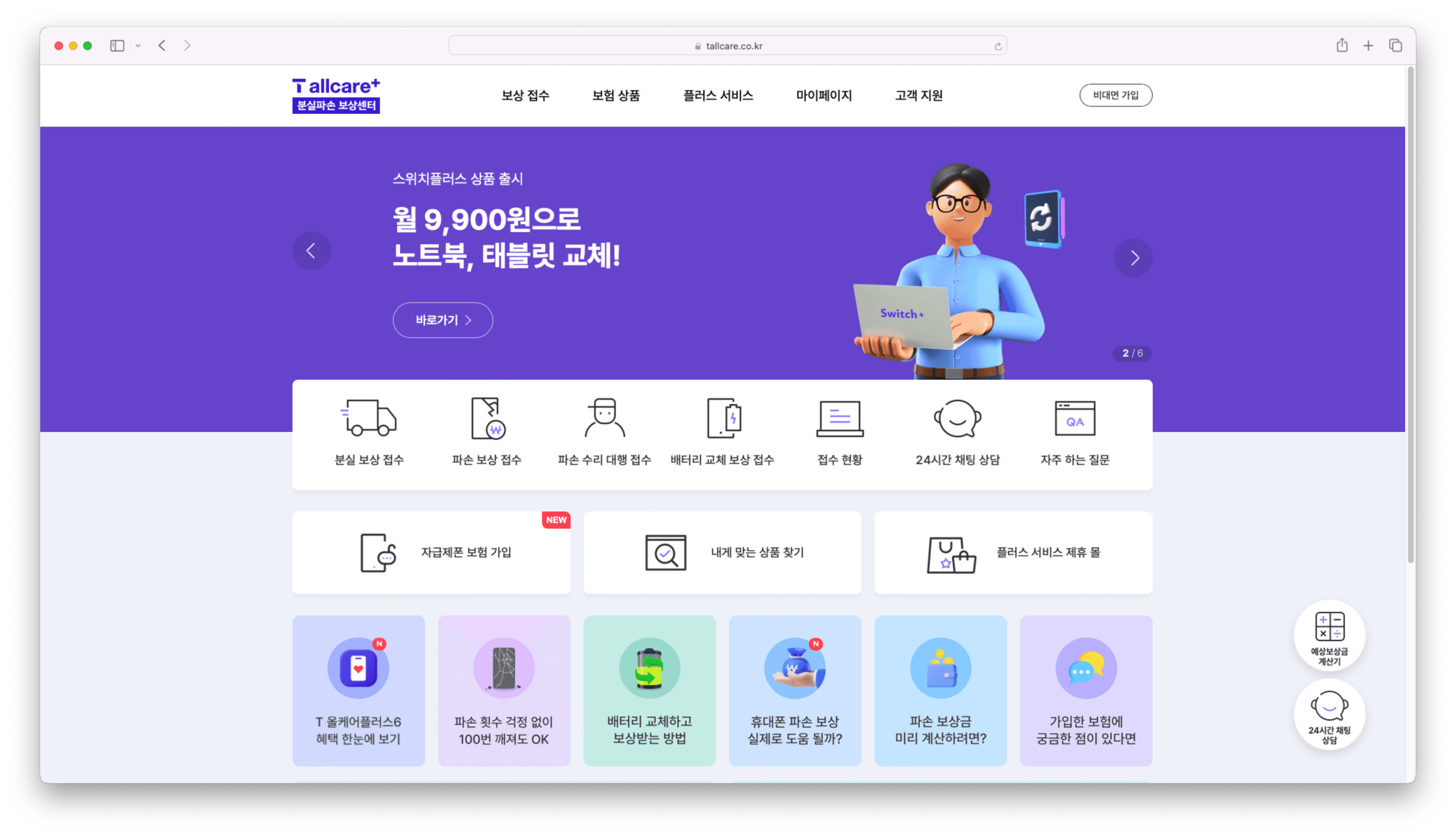
01 — Context
Summary
When I first opened the codebase, I found inconsistent code and files scattered without logic, along with multiple "common" files with different names doing the same thing. It was the accumulated result of work by roughly 50+ developers over the years before I even joined. This was a live, high-traffic site with real customers and an active team of developers working in parallel, so my focus was on improving the codebase incrementally without ever risking what was already running in production.
02 — Challenge
Problem
No UI or style documentation existed, and naming conventions and CSS methodologies were used differently by the global and local teams. Years of accumulated dead code, duplicate mobile/PC implementations, and inconsistent patterns had created a codebase prone to deployment-time bugs.
03 — Approach
What I Did
- Respected existing patterns, but wrote all new code to a consistently higher standard, incrementally improving codebase coherence.
- Removed dead code and unused tracking scripts, and consolidated device-specific implementations into single components, cutting code volume by approximately 75% in affected areas.
- Extended antd's Datepicker beyond its defaults. Added a confirm button, repositioned the mobile close button, and handled divergent mobile/PC requirements within a single component.
- Was brought in to support the frontend team for the My Page launch, building 4 menu pages under My Page together with one other developer. Split responsibilities across markup, styling, and a dedicated history page to hit the launch.
04 — Outcome
Result
This project gave me a firsthand view of what an unmanaged codebase costs over time. Over four years, I delivered ~20 pages end-to-end, including high-traffic surfaces like the main homepage and My Page, while continuously refactoring legacy code without disrupting a live production environment. I also handled high-risk, consumer-facing changes within this codebase, including a full font replacement and design renewal. I'm still maintaining this codebase today alongside the Admin Portal, handling ongoing CRs as they come in.